
 Florida Plastic Surgery - Dr. Hamwi


If you’ve been getting Botox for a while, you may have noticed something interesting: your results seem to stretch a little further with each round of treatment. You’re not imagining it. There’s real science behind why long-term Botox users often enjoy longer-lasting results, but there’s also a ceiling to that benefit, and crossing it carries risks your injector should be discussing with you.
At Florida Plastic Surgery, double board-certified plastic surgeon Dr. Kristopher Hamwi takes a science-backed, individualized approach to Botox in Sarasota, FL. His devotion to evidence-based treatment means patients get results that look natural and last, without the downsides of overtreatment.
Here’s what the research actually says about Botox longevity, and what it means for your treatment plan.
How Long Does Botox Last, and Why?
For first-time patients, Botox typically lasts three to four months. That’s the baseline most board-certified injectors will give you, and it’s backed by clinical data. Results involve a gradual loss of effect as the body breaks down the purified protein, and nerve-to-muscle communication is restored.
Botox works by temporarily blocking the nerve signals that tell targeted facial muscles to contract. No contraction means no dynamic wrinkle, which are formed by smiling, squinting, or furrowing. Once your body breaks down the neurotoxin, muscle activity returns and wrinkles gradually resurface.
What changes over time is the muscle itself.
Why Repeat Treatments Can Last Longer?
Here’s where it gets interesting for long-term patients.
When a muscle is repeatedly prevented from contracting – treatment after treatment, cycle after cycle –it begins to weaken because of disuse. This is called muscle atrophy, and it’s the same physiological principle at work when someone stops going to the gym. A muscle that isn’t used regularly loses mass and strength.
When targeted tissue becomes accustomed to the effects of the toxin, it starts to weaken, which means future treatments may last longer. This means that after six to twelve months of consistent treatment, many patients find their Botox results extending from the initial three to four months toward five or even six months.
Some patients also develop a kind of “muscle memory” effect. They subconsciously reduce the frequency of the expressions that deepen their wrinkles, which further slows the return of lines between appointments.
The takeaway: consistent treatment at appropriate intervals, under the care of a skilled injector, can progressively train your facial muscles to require less correction over time.
Why Over-Treatment Isn’t the Answer
It would be tempting to conclude that more Botox, more often, equals the best results. That’s not how it works, and exceeding appropriate dosing and frequency introduces real medical risks.
Antibody Formation and Botox Resistance
Botox is a purified protein, and like any protein introduced into the body, it may trigger an immune response. When this happens repeatedly at high doses or short intervals, your immune system may produce neutralizing antibodies that bind to the neurotoxin and blunt, or completely block, its effect.
When antibodies form, your body may become more resistant to Botox, making it less effective.
While true resistance is rare – clinical trials from Allergan (Botox’s manufacturer) put the rate at no more than 1.5% of patients – the risk increases meaningfully with overtreatment. Once antibodies develop, the only course of action is to pause treatment and potentially switch to an alternative neurotoxin, such as Xeomin, which contains no associated proteins and carries a significantly lower immunogenic risk.
What “Overtreatment” Actually Looks Like
Overtreatment doesn’t just mean too many units. It also means injecting too frequently, such as before the previous treatment has fully metabolized, or treating areas that don’t require it. An experienced injector will know the difference between a patient whose Botox has genuinely worn off and one who is seeking a top-up too soon. That clinical judgment is part of what separates a specialist, like the experts at Florida Plastic Surgery and MedSpa, from a less experienced provider.
The Right Maintenance Schedule: Every 3–4 Months
For most patients, the medically appropriate maintenance interval is every three to four months. This schedule coincides with the natural metabolic cycle of the neurotoxin and allows muscle activity to begin returning without fully re-strengthening, keeping wrinkle formation in check while averting the immune exposure that comes with excessive dosing.
Ideal scheduling relies on individual factors, including muscle strength, treatment area, your metabolism, and your cosmetic goals.
Waiting too long between appointments, six months or more, allows the muscles to regain full strength, so your next treatment starts from scratch rather than building on earlier progress.
At Florida Plastic Surgery, our expert injectors work with each patient to establish a customized treatment cadence rather than defaulting to a one-size-fits-all schedule. Schedule a consultation today to discuss what’s right for you.
What Factors Affect How Long Your Botox Lasts?
Even within a consistent maintenance schedule, Botox duration varies from person to person. Here are the key variables that influence the duration of your results.
Metabolism
Patients with faster metabolisms, including frequent exercisers, may find that Botox metabolizes more quickly than average. Patients with higher metabolism, particularly those who exercise regularly (five to six days per week), may experience results lasting less than three to four months. Younger patients also tend to metabolize neurotoxins faster than older individuals.
Muscle Mass and Strength
Larger, stronger muscles require higher doses of Botox to achieve the same effect and may break down the treatment faster. This is why men often require more units than women for equivalent results. Areas such as the masseter (jaw muscle) and the forehead in heavily muscular patients may show a shorter initial duration.
Injector Skill and Placement
This may be the single most underappreciated factor. Precise placement, appropriate depth, and accurate dosing all affect how effectively Botox works and how long results hold. An underdosed treatment won’t last, and an improperly placed one may diffuse into unintended muscle groups. Our experts’ training ensures every injection is purposeful and anatomically precise.
Treatment Area
Different areas of the face metabolize Botox at different rates. The forehead, glabellar lines (the “11s”), and crow’s feet tend to last three to four months on a consistent schedule. Masseter Botox may extend slightly longer, four to six months, because those muscles are large and strong but used differently than expressive facial muscles.
Tips to Maximize Botox Longevity
Getting the most out of every treatment isn’t just about what happens in the office. Here’s what patients can do to extend results:
- Stay consistent. Don’t wait until wrinkles have fully returned. Sustaining a steady three-to-four-month schedule prevents muscles from fully re-strengthening between treatments and exacerbating atrophy over time.
- Avoid intense exercise for 24 hours post-treatment. Elevated heart rate and blood flow can accelerate the initial metabolism of the neurotoxin before it fully binds.
- Don’t lie down for four hours after the injection. This helps prevent the product from migrating to unplanned areas.
- Avoid blood thinners before your appointment. Aspirin, ibuprofen, fish oil, and vitamin E can increase bruising, which affects healing at the injection site.
- Choose an expert injector. This can never be overstated. Results depend heavily on who is holding the syringe. Choosing an expert who customizes their approach to each patient’s anatomy produce outcomes that both look better and last longer.
Ready to get started?
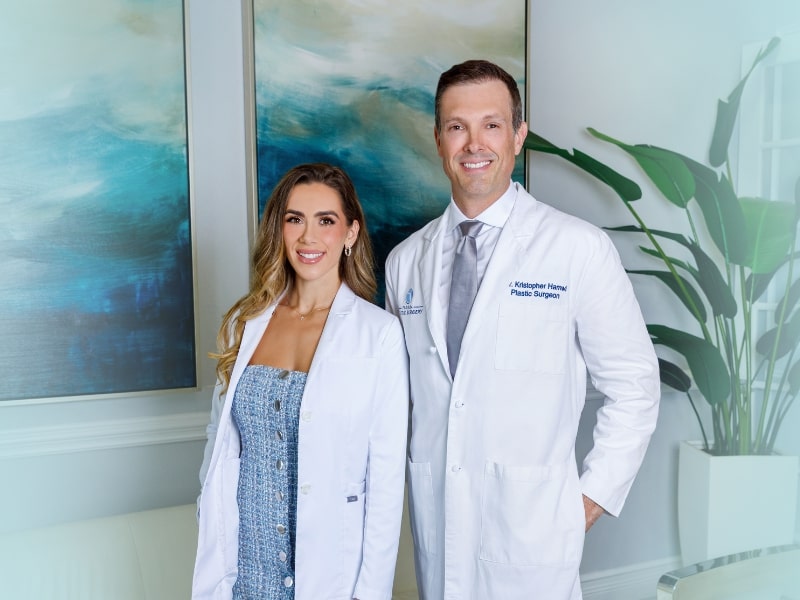
Dr. Kristopher Hamwi has trained for over ten years at some of the world’s top institutions to become one of Florida’s best aesthetic plastic surgeons. Utilizing his exceptional skill, rigorous training, and genuine, caring approach, Dr. Hamwi strives for total patient satisfaction. Ready to partner with Sarasota’s leading aesthetic plastic surgeon?
Why Patients Trust Dr. Kristopher Hamwi in Sarasota, FL
Dr. Hamwi is a double board-certified plastic surgeon who has trained at some of the world’s finest institutions and has operated on patients from across the globe. His philosophy is simple: every patient deserves a treatment plan tailored to their specific anatomy, goals, and medical history, not a template.
That philosophy extends to Botox. Rather than maximizing units per visit, Dr. Hamwi and his team concentrate on attaining the most natural, lasting result with the most appropriate dosing. For patients in Sarasota and the surrounding Gulf Coast region, his practice offers a rare combination of surgical-level expertise and delicate non-surgical skill.
Explore the Botox and fillers services at Florida Plastic Surgery and MedSpa and see what individualized, expert-level care looks like.
Ready to See What Consistent Botox Care Can Do?
Long-lasting, natural-looking Botox results don’t happen by accident. They’re the product of the right dosing, the right schedule, and the right hands.
Dr. Kristopher Hamwi and the team at Florida Plastic Surgery and MedSpa in Sarasota, FL bring board-certified surgical accuracy to every non-surgical treatment. Whether you’re considering Botox for the first time or hoping to optimize results you’ve been building for years, a tailored consultation is the best place to start.
Call us at (941) 800-2000 or request your consultation online at floridaplasticsurgery.com today.
